
Two Tree Island Coastal Revetment Upgrade
location
Two Tree Island, Essex
Type
Flood Protection
Solutions used
LSA and OSA
The Challenge
The island’s flood defences were failing regularly, with the existing concrete and ragstone revetments offering poor resistance to tidal erosion. Access restrictions — limiting loads to 10 tonnes — made transporting heavy materials and large precast units impractical.
The challenge was to design and deliver a strengthening system that would improve long-term resilience, reduce costs, and minimise environmental impact, while remaining logistically feasible within the island’s constraints.
The Solution
Working alongside Fitzpatrick (contractor) and Halcrow (engineer), HEP proposed an asphalt revetment system as a cost-effective alternative to traditional concrete block construction.
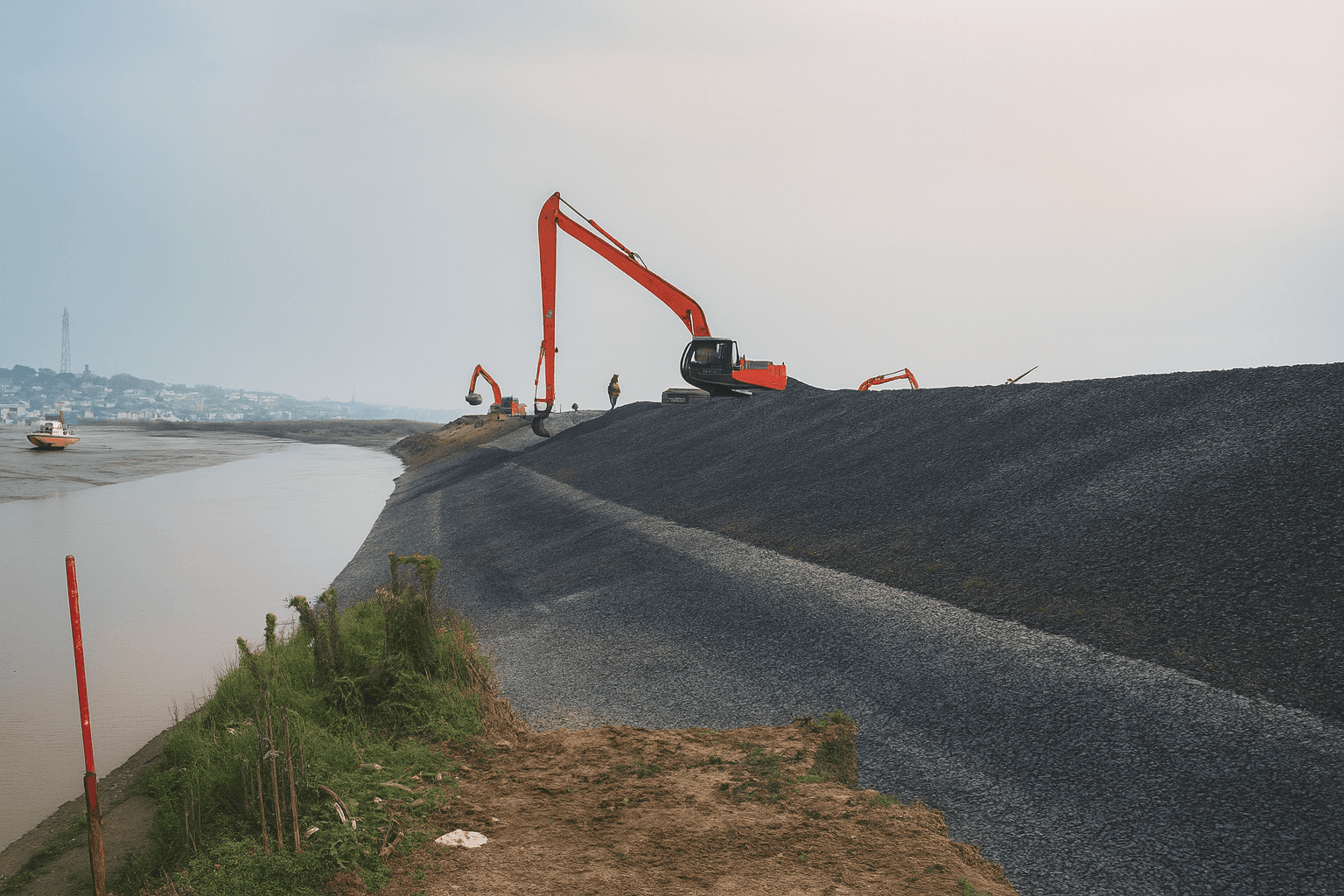
The design comprised an Open Stone Asphalt (OSA) armour layer placed over a Lean Sand Asphalt (LSA) filter layer — providing a robust, watertight structure that resists tidal forces while allowing flexibility and durability over time.
The asphalt system offered several advantages: it was significantly cheaper than the proposed concrete alternative, quicker to install, environmentally beneficial, and ideally suited to the island’s access limitations.
How We Delivered
The works were completed over an eight-week programme, with materials and plant carefully selected to suit the island’s restricted load capacity. On-site logistics were planned meticulously to ensure continuous productivity within tight environmental and access constraints.
The asphalt layers were placed and compacted with precision to achieve a smooth, resilient finish, ensuring long-term performance with zero requirement for follow-up maintenance.
Community & Environment
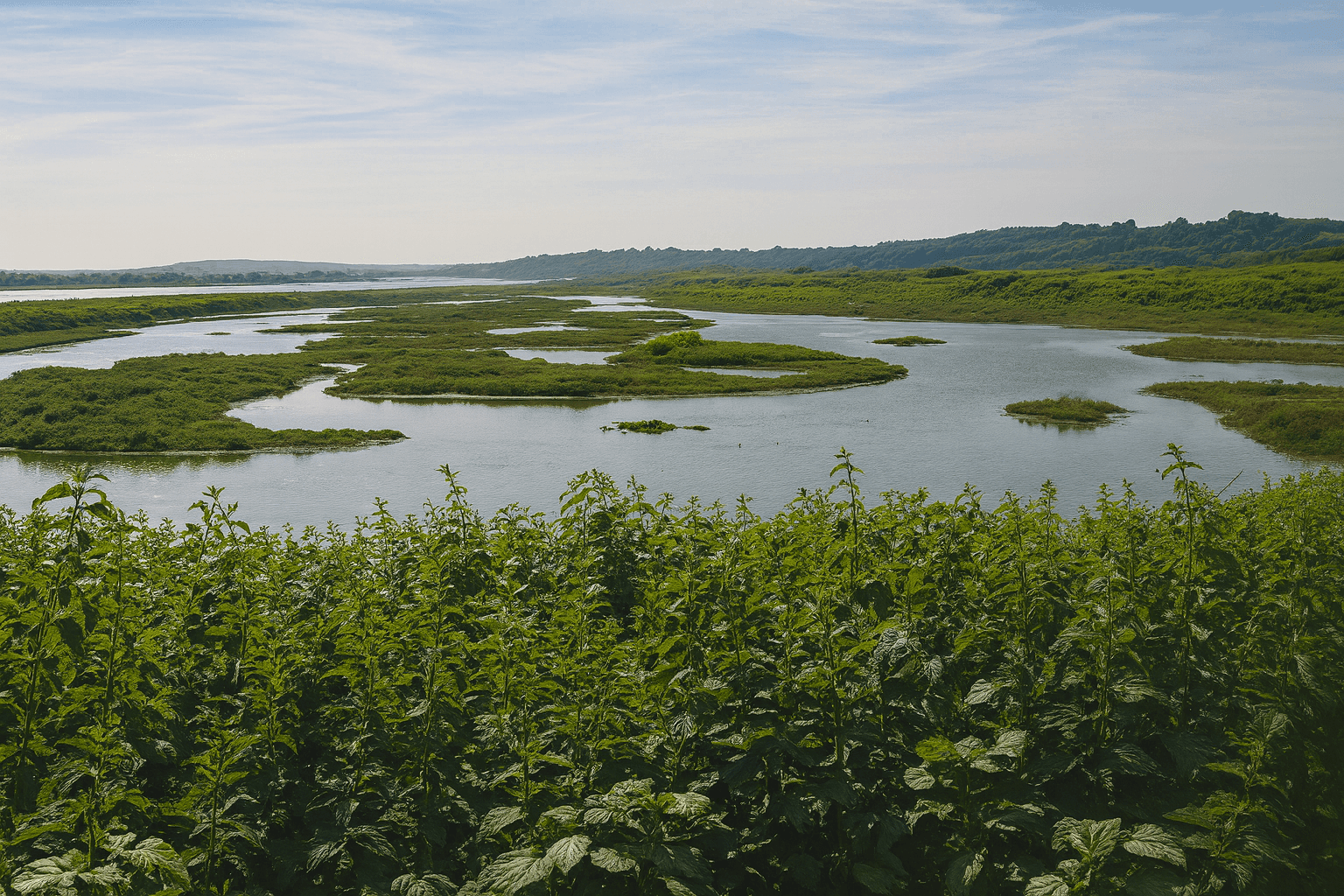
Two Tree Island is now managed as a nature reserve, supporting birdlife and coastal ecosystems within the Thames Estuary. Environmental stewardship was a key focus of the project, with the asphalt system chosen not only for its engineering benefits but also for its reduced environmental footprint.
By minimising material transport and avoiding the need for large concrete units, the works helped preserve the island’s natural character while strengthening flood protection for surrounding communities.
The Outcome
The completed revetment delivered a high-performance, low-maintenance solution that remains effective after nearly two decades. The asphalt system provided greater resilience than the original concrete alternative, significant cost savings, and measurable environmental advantages.
Today, Two Tree Island stands as a successful example of sustainable flood defence engineering — combining innovation, practicality, and long-term value in one of the UK’s most environmentally sensitive coastal settings.