Skeffling Pumping Station – Eel Passage Installation
location
Skeffling Pumping Station, Yorkshire
Type
Environmental
Solutions used
OSA
The Challenge
The European eel population has declined significantly in recent decades, largely due to barriers created by flood defences and water management infrastructure. Eels migrate between marine and freshwater environments and require wet, textured surfaces to move between the two.
At Skeffling, a safe and naturalistic route was needed to enable eels to travel up and over the existing embankment without disrupting flood protection or habitat formation works. The challenge lay in designing a durable, environmentally sensitive surface that met both ecological and engineering requirements.
The Solution
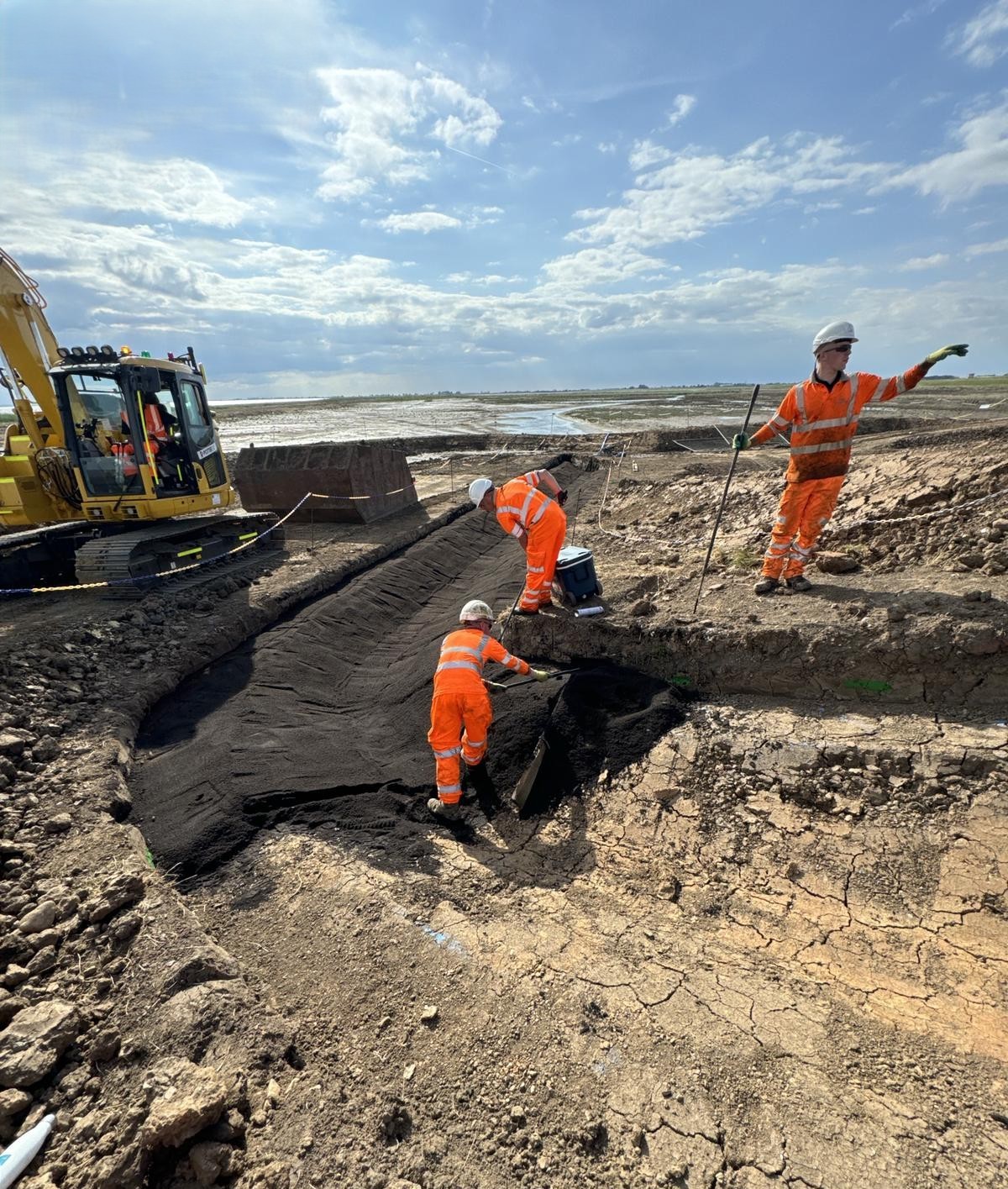
The Environment Agency identified Open Stone Asphalt (OSA) as an ideal material for the eel passage due to its naturally rough, water-retaining surface. Working closely with the Environment Agency and project engineers, the team developed a tailored solution to replicate the conditions eels require for migration — combining surface texture, moisture retention, and gradient optimisation.
A test section was produced to verify the suitability of the material and surface profile for eel movement before final installation. The trial confirmed that the OSA surface provided the right balance of roughness and moisture, enabling eels to climb safely and efficiently.
How We Delivered
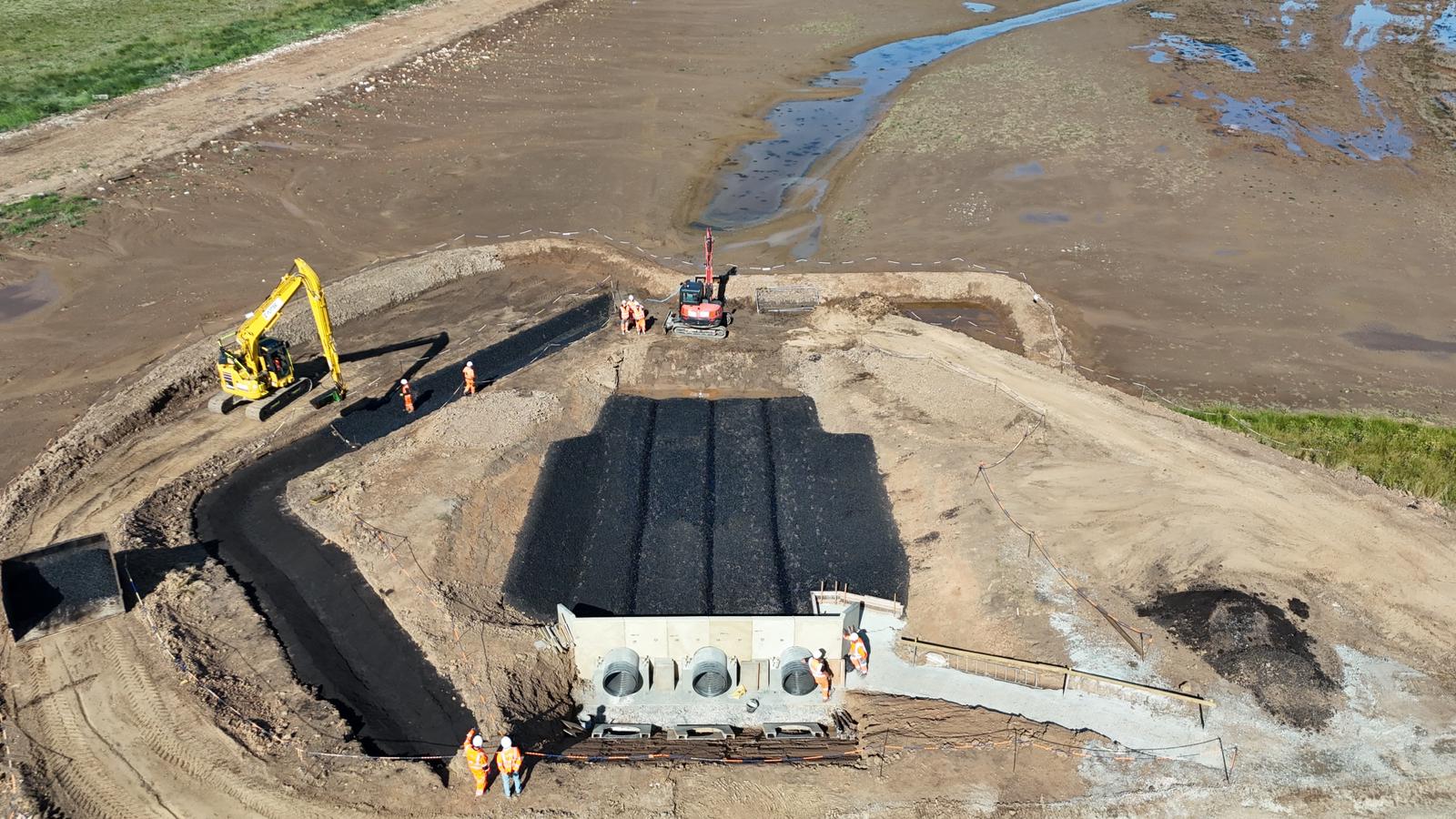
Following successful testing, the first full eel pass installation completion in Summer 2025. The works form part of the wider flood embankment re-alignment scheme, requiring coordination with ongoing civil and environmental operations.
By applying engineering precision to ecological design, HEP is helping ensure the new infrastructure supports wildlife movement while maintaining the function and resilience of the flood protection system.
Community & Environment
This project reflects the growing emphasis on integrated environmental engineering — where infrastructure and ecology work hand in hand. By facilitating eel migration, the new passage supports the recovery of a protected species while contributing to the ecological connectivity of the Humber Estuary.
The wider scheme also enhances biodiversity through the creation of new mudflats and saltmarsh habitats, supporting a range of coastal and migratory species. Collaboration with environmental partners ensures the project delivers both flood resilience and long-term environmental gain.
The Outcome
The Skeffling Eel Passage provides a permanent, low-maintenance solution that enables eels to safely navigate the embankment and access upstream habitats.
The project demonstrates how innovative material use, such as Open Stone Asphalt, can be adapted to support wildlife conservation within major flood and coastal defence schemes. It stands as a model for how sustainable engineering can enhance both infrastructure performance and ecological value.